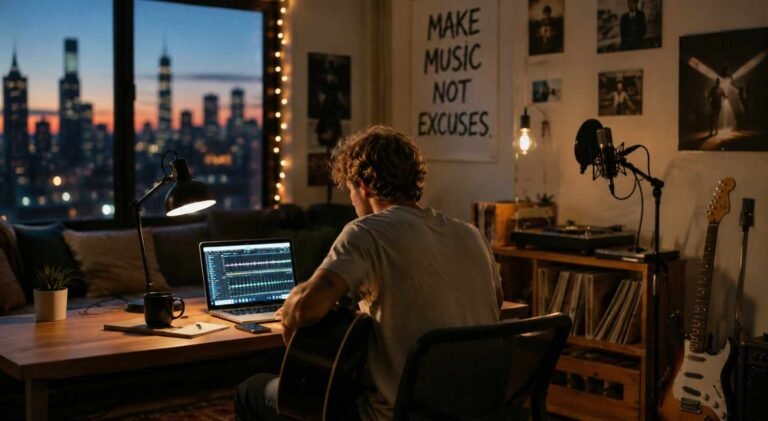




I have never been able to focus for hours with complete silence. At the same time, loud vocals and abrupt beat drops can pull me away from reading or writing. That is why I use chill alternative playlists for studying when I want music that feels interesting without taking over the room. The right mix can make a dorm desk, campus library, coffee shop, or late-night apartment session feel calmer.
Whether I am preparing for an AP exam, working through SAT practice, studying for community-college finals, or drafting a university research paper, the music has to support the task rather than compete with it. The best alternative study mixes combine steady rhythms, soft production, controlled vocals, and natural transitions.
Instead of relying only on classical piano or endless lo-fi beats, these playlists bring together dream pop, indie folk, post-rock, bedroom pop, ambient rock, and mellow electronic music.
What makes an alternative playlist study-friendly?
The playlist should match the assignment. Dense reading usually works better with instrumental or lyric-light tracks, while sketching, coding, organizing notes, and solving familiar problems can handle more vocals. Consistent volume also matters because sudden changes can interrupt concentration.
I prefer playlists that run for 60 to 90 minutes. That supports a complete study block without making me reach for my phone. Smooth transitions, recent updates, offline downloads, and limited interruptions are useful for students moving between lectures, residence halls, libraries, coffee shops, and public transit.
Best alternative playlists for different study moods

1. Dream-pop reading room
Dream pop uses hazy guitars, soft percussion, and floating vocals. A mix featuring Beach House, Men I Trust, Mazzy Star, and Cigarettes After Sex can work for casual reading or reviewing class notes.
The style creates an atmospheric background without feeling empty. Keep the volume low when the lyrics become noticeable, especially while reading textbooks or editing an essay.
2. Instrumental indie focus
Instrumental indie is a safer choice for research papers, textbook chapters, and exam preparation. Look for guitar-driven tracks with restrained drums, no vocals, and gradual transitions.
It feels more alive than plain ambient audio but stays out of the way once you settle into the assignment. This style is particularly useful for long library sessions and timed study blocks.
3. Post-rock deep work
Post-rock suits long projects because many songs develop slowly instead of chasing a fast chorus. Calmer tracks from Explosions in the Sky, Hammock, This Will Destroy You, and Mogwai can support coding, graphic design, and analytical work.
Choose softer collections rather than cinematic mixes packed with dramatic crescendos. Even Mogwai’s upbeat tracks or sudden instrumental peaks can be as distracting as loud vocals.
4. Bedroom-pop homework mix
Bedroom pop adds personality to routine work. Softer songs from Clairo, beabadoobee, Dayglow, and similar artists can make flashcards, file organization, and lighter homework less tedious.
Because the lyrics are often clear, this style is better for repetitive tasks than demanding reading. It can also add energy to afternoon study sessions when slower instrumental music feels too sleepy.
5. Indie-folk morning study
Acoustic guitar, gentle harmonies, and warm production fit early sessions before class. Search Spotify, Apple Music, or YouTube for mellow mixes influenced by Bon Iver, Iron & Wine, Sufjan Stevens, and Phoebe Bridgers.
For memorization, choose instrumental versions or tracks with understated vocals. Save emotionally intense songs for breaks, since a powerful lyric can quickly pull attention away from the material.
6. Alternative lo-fi note-taking
Alternative lo-fi combines imperfect guitar loops, dusty drums, tape textures, and indie-inspired melodies. It suits students who find standard lo-fi repetitive or overly predictable.
The steady sound works well for rewriting lecture notes, highlighting key ideas, creating study guides, and organizing digital folders. Look for mixes with smooth transitions and limited spoken samples.
7. Soft grunge after dark
Instrumental or lo-fi grunge offers darker guitar tones without overwhelming vocals. Look for muted drums, washed-out riffs, controlled distortion, and consistent volume.
This style suits late-night sessions when cheerful music feels distracting but full-volume rock feels too aggressive. It can provide enough energy to stay awake without turning the study session into a private concert.
8. Ambient alternative exam review
Ambient alternative removes most rhythmic pressure while keeping organic guitar and electronic detail. It works for slow memorization, quiet reading, and reviewing material before a test.
Longer tracks reduce noticeable transitions, helping the playlist blend into the background. This is one of the strongest options for exam week when concentration matters more than musical variety.
9. Indie electronic concentration
Artists such as Tycho, Four Tet, Bonobo, and Boards of Canada sit between indie, ambient, and electronic music. Their smoother tracks can support spreadsheets, data work, coding, and repetitive assignments.
Choose downtempo collections instead of dance-focused playlists with heavy bass drops. A steady pulse can maintain momentum, but sudden changes may interrupt a productive rhythm.
10. Human-curated discovery playlist
Algorithmic mixes are convenient, but playlists made by college radio hosts, music writers, independent labels, or dedicated fans often have better flow. Human curators are more likely to connect tracks through mood, pacing, production, and lyrical intensity.
Look for a clear description, recent update date, and thoughtful sequencing. A focused collection is usually more useful than hundreds of unrelated tracks collected under a vague study-related title.
How to match the playlist to the assignment

Start by judging how much language the task requires. For reading, essay editing, and memorization, choose instrumental post-rock, ambient alternative, or indie electronic music.
For math practice, visual design, organization, coding, or routine homework, bedroom pop and lyric-light indie may work well. Upbeat tracks can also help with simple tasks such as arranging notes, preparing presentation slides, or creating a weekly study schedule.
Test any playlist for ten minutes. If you notice the singer more than the assignment, switch to an instrumental mix. Keep the volume only high enough to cover background noise.
Download the playlist before entering a building with unreliable Wi-Fi, and turn on “Do Not Disturb” so changing one song does not become twenty minutes of scrolling. When possible, use a playlist that is longer than the planned session to avoid handling the phone halfway through.
Frequently asked questions
1. What are the best chill alternative playlists for studying?
Strong choices include instrumental indie, soft post-rock, dream pop, alternative lo-fi, ambient rock, and mellow indie electronic mixes. The best option depends on whether you are reading, writing, memorizing, designing, or completing routine work.
2. Is indie music distracting while studying?
It can be when the lyrics are prominent or emotionally engaging. Familiar songs, low volume, and instrumental versions are generally easier to keep in the background. Students completing language-heavy work may perform better with lyric-free alternatives.
3. Is post-rock suitable for deep focus?
Calmer post-rock can support long work sessions because it often uses gradual development and limited vocals. Skip tracks with dramatic peaks during difficult reading, exam preparation, or detailed editing.
4. How long should a study playlist be?
A 60- to 120-minute playlist works for most sessions. It should be long enough to prevent interruptions while maintaining a consistent mood, energy level, and volume.
Final takeaways
I focus better when I choose music for the assignment instead of using the same playlist every time. Instrumental indie helps me read, bedroom pop keeps routine work moving, and dream pop makes creative sessions feel less rigid.
I also pay attention to the vocals, energy, duration, and track order before committing to a playlist. By matching those elements to the work in front of me, I can enjoy alternative music without letting it compete with my concentration.